
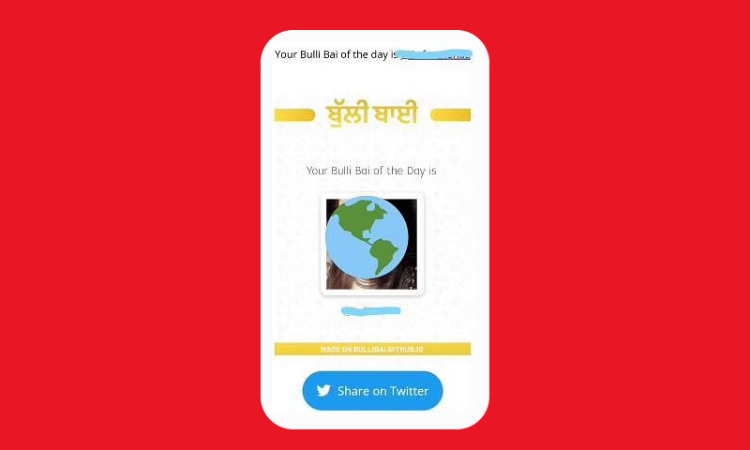
Source: Live Law
In July 2021, on an open-source platform called GitHub, an application named “Sulli Deals” was circulated. The app uploaded photographs of prominent, vocal Muslim women, offering them in “mock auctions”. The targeted women were journalists, lawyers, researchers, and civil rights activists outspoken about the rising tide of Hindu nationalism. Despite formal police complaints filed in Delhi and Uttar Pradesh, months passed without substantial action; no meaningful investigations took place, and no arrests were made.
On January 1, 2022, hundreds of Muslim women across the country woke up to see their photographs circulated on a replica app called “Bulli Bai.” Their photographs, taken directly from social media platforms, appeared on this application putting them up for auction as the “Bulli Deal of the Day.” This targeted campaign of virtual humiliation inflicted profound psychological distress and widespread shock on the women whose images were exploited. State action arrived only after intense public outrage compelled police to act in early 2022, resulting in arrests across several states. Yet the reckoning was brief. Within months, trial courts granted bail to the prime accused, citing their young age and first-time offender status. On October 6, 2026, Vishal Jha, an accused, was discharged by a Mumbai magistrate court. The court cited that the prosecution had failed to establish his role in the creation and propagation of the app.
The app was not an isolated incident. While women on social media routinely face misogyny, objectification, and abuse, for Muslim women this abuse happens with compounded force; their religion and identity as Muslims becomes an added vector. Amnesty International’s Troll Patrol India study (2020) revealed that Muslim women politicians on social media received 94.1 percent more ethnic and religious slurs than other women, facing a relentless mix of sexism and communal hate.
It is high time that we establish uncompromising rules to hold both digital platforms and the individuals behind such abuse accountable. Tech platforms cannot operate behind a veil of algorithmic neutrality. We need clear, enforceable, and stringent digital regulations that, apart from holding platforms legally accountable, also establish mechanisms for rapid takedowns of such harassment. Until our laws confront digital violence as actual violence, women including muslim women will continue to face abasement, their civic agency and online visibility hollowed out, completely defenseless against such organized hate.
