
Picture Credit: Hindustan Times
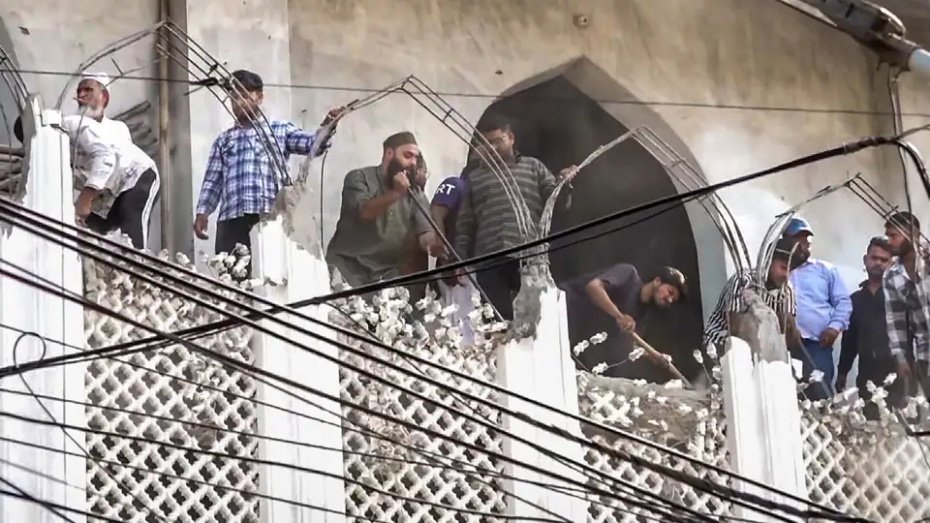
Workers demolish a portion of the ‘Shahi Masjid’ for road widening, in Ujjain, Madhya Pradesh: PTI
Ujjain is one of India’s oldest religious cities, but its history has never belonged to one faith alone. People of different faiths have all found a place here over centuries. The Shahi Masjid at Chhatri Chowk is part of that history. Mosque management traces its foundation to approximately 1390 CE, with government records establishing its existence atleast by 1925. The controversy began with a road-widening project ahead of Simhastha Kumbh. A portion of the mosque fell within the proposed 15-meter alignment, affecting the prayer hall, a 120-foot minaret, and the dargah. The administration said widening was necessary to manage pilgrim flow, with other religious structures affected. The mosque committee challenged this, citing historical records and Waqf status, but the Madhya Pradesh High Court declined to intervene under Article 226, holding that administrative procedures had been observed.
This bureaucratic process met resistance on the ground. As news of imminent demolition spread, hundreds of local Muslims gathered outside the mosque, keeping an overnight vigil. Taking shifts to guard the perimeter, they showed that the site is part of their heritage and daily lives. The administration cited parity, noting over two hundred Hindu and Jain shrines were also marked for alteration. Still, for a minority community, seeing another historic mosque altered carries a sense of loss. The mosque committee reached a court-endorsed settlement to dismantle the marked portion with administrative assistance. During removal on October 1, a crane belt snapped while lowering a section of the minaret, dropping masonry onto the roof and causing severe structural damage.
This incident reflects a wider fear and anxiety among the community, heightened by the growing number of instances in which mosques have faced demolition or alteration. The vigil outside the Shahi Masjid reflected this fear, as people gathered to protect a place tied to their history, faith and sense of belonging. The community felt resposnible and came together to protect a revered place that has stood across generations. But that responsibility should also be shared by the courts and administration, to recognise that decisions concerning such places carry consequences beyond the immediate legal or administrative question.