
Picture Credit: Maktoob Media
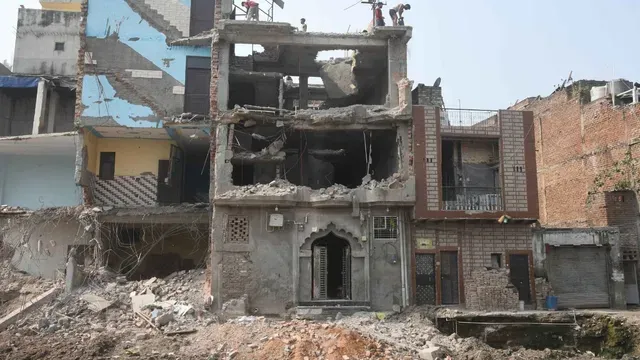
A late-night demolition drive in Delhi’s Shalimar Bagh on 22–23 September 2026 resulted in the partial demolition of Madina Masjid and adjoining residential structures as part of an ongoing road-widening and anti-encroachment exercise near Max Hospital Road. Civic authorities maintained that the structures fell within the alignment of the road-widening project and that prior notices had been issued. The operation was conducted amid heavy police deployment and was subsequently halted, with the bulldozers removed from the site.
The mosque committee, however, has disputed the adequacy and sequence of the notices. According to its representatives, multiple notices were issued after the committee had sought legible copies of documents to prepare its response and had approached the relevant appellate forum. The committee has also claimed that documents and site plans indicating that portions of the mosque dated back to 2001 were presented during the proceedings. These assertions remain matters of dispute and require examination against the underlying municipal and judicial records.
The episode assumes greater legal significance because the Delhi High Court had separately considered the widening of Road No. 320, Shalimar Bagh, to 30 metres in proceedings earlier in 2026. The Court’s April judgment and subsequent May review proceedings provide important background to the road project and the removal of structures affected by it.
The incident therefore raises significant legal questions concerning the adequacy of notice, observance of the principles of natural justice, the scope of municipal demolition powers, and the availability of effective judicial remedies. It also engages constitutional protections under Articles 14, 21 and 300A, particularly where administrative action results in the deprivation or demolition of residential or religious structures. The episode further illustrates the need to examine whether executive action is supported by lawful authority, follows the prescribed procedure, and remains subject to meaningful judicial review.