
Credit: Daily Sun
The Committee on the Elimination of Racial Discrimination released its report on 25 August 2026. An 18-member independent body monitors compliance with the Convention. This was the first time that India appeared before the review board of CERD since 2007, headed by Solicitor General Tushar Mehta.
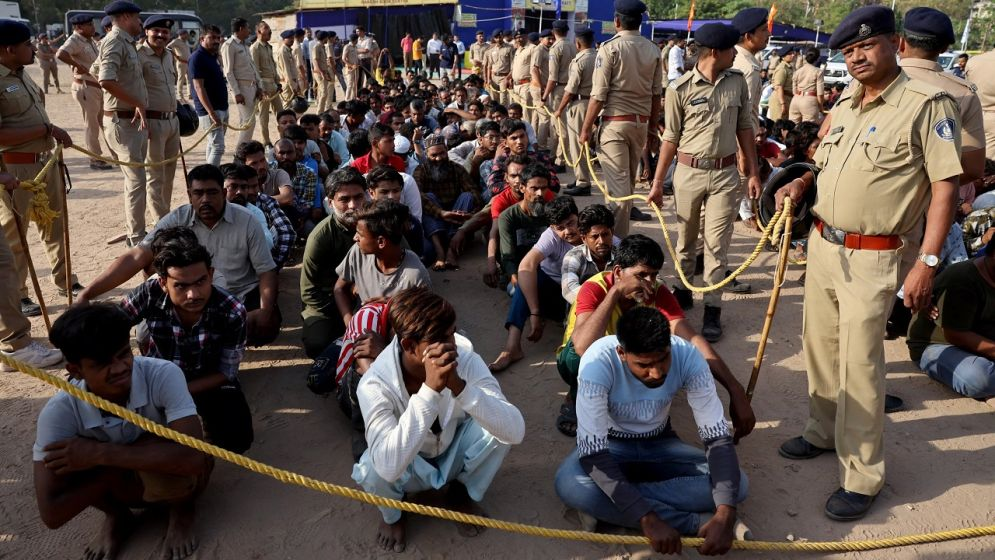
The committee expressed grave concerns regarding reports of large-scale violations carried out by law enforcement officials, particularly against Rohingya refugees and Bengali-speaking Muslims. The order issued by the Union Ministry of Home Affairs in 2017 and 2025 regarding verification of suspects as undocumented migrants from Bangladesh and Myanmar included instructions for deportation.
Several persons were forced to prove their nationality, and upon their failure, they were forcefully sent to Bangladesh. In one such case, a Bengali woman was forcefully sent to Bangladesh while her entire family remained in India and had Indian nationality. Similarly, in May 2025, 40 Rohingya refugees were deported by forcing them into the Andaman Sea. Forcing asylum seekers and Refugees to a country where there is a clear threat of violence and endangering their lives is at odds with the non-refoulement principle.
The UN committee stated that “police stops and identity checks involving racial profiling had reportedly resulted in arbitrary arrest and detention without due process, as well as torture and ill-treatment”. It urged India to urgently address discrimination, hate speech, hate crimes and end collective expulsions.
The committee also expressed concerns over reports of heightened violations against ethnic and ethno-religious groups, Indigenous and Tribal peoples, including Scheduled Tribes, Scheduled Castes, particularly Dalits and non-citizens. It included racially motivated violence, excessive use of force, extrajudicial killings, arbitrary detentions, torture, ill treatment and sexual violence. It called for impartial investigations and holding those responsible accountable.
CERD also objected to the implementation of NRC (2019) and recommended strengthening the right to freedom of thought, conscience and religion, and the right to health. India ranks 110 among 165 countries in the Human Freedom Index, and 1318 hate speech incidents were reported in 2025. India’s Ministry of External Affairs has denied the criticism. Regardless, numbers speak for themselves. Refusing to address these findings doesn’t make them disappear ,it only invites further failure.