
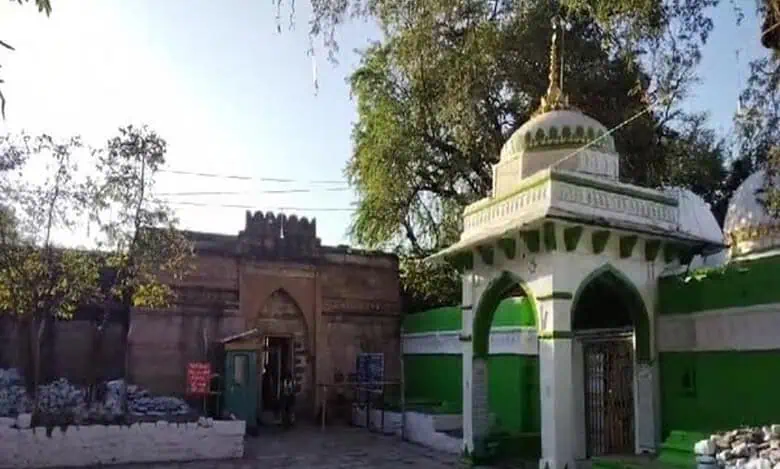
Bhojshala Temple-Kamal Maula Mosque complex (File Photo/ANI
In a repeat of a familiar pattern, the Madhya Pradesh High Court recently ruled that the disputed Bhojshala Temple-Kamal Maula Mosque complex is a temple dedicated to Goddess Saraswati (Vagdevi). After the dispute emerged, the Archaeological Survey of India (ASI) passed an order in 2003 which allowed Hindus to worship on Tuesdays and Muslims to offer Friday namaz at the site. Challenging this arrangement, the Hindu Front for Justice and other petitioners sought exclusive worship rights. The Court quashed the ASI order, with a bench of Justice Vijay Kumar Shukla and Justice Alok Awasthi citing the continuity of Hindu worship and historical literature linking the site to Sanskrit learning under Raja Bhoj.
The structure, built around 1304 and 1331 during the Delhi Sultanate, has long been known as the Kamal Maula mosque, associated with the Sufi saint Kamaluddin Chishti. Muslim worship at the site spans nearly 700 years, reflected in historical references, revenue records and colonial documentation. The verdict relies heavily on the ASI’s 98-day survey and its 2,000-page report documenting sculptures, inscriptions, architectural fragments and references to an 11th-century Sanskrit learning centre. But the survey process itself faced criticism. The All India Muslim Personal Law Board objected to the report repeatedly describing the site as “Bhojshala temple” as though the claims were settled. Questions were also raised over incomplete videography, the absence of court-directed carbon dating, and the selective reading of evidence pointing to a more layered past.
The larger concern lies in the legal route adopted. By invoking the protected monuments exemption under Section 4(3), the judgment sidesteps the spirit of the Places of Worship Act, 1991, enacted to freeze the religious character of places of worship as they existed on 15 August 1947 and prevent precisely such disputes after Ayodhya. The exception is now increasingly being used to reopen claims at historically sensitive sites. If constitutional guarantees can be bypassed each time archaeology is deployed to revisit centuries-old religious claims, then is the Places of Worship Act still a binding safeguard, or merely a temporary restraint waiting to be judicially diluted?
#PlacesOfWorshipAct
#ReligiousFreedom
#RuleOfLaw
#AyodhyaAftermath